
WHAT IS A BONSAI?
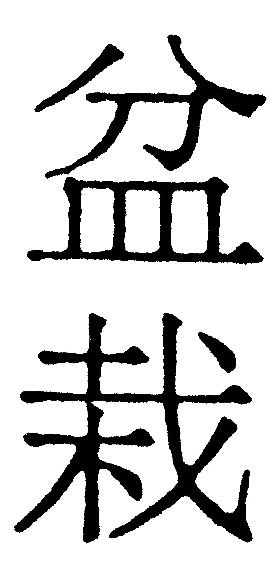
The kanji for “bonsai”
Bonsai (pronounced “Bone-Sigh”) is the Japanese pronunciation of two written characters that directly translated mean “container planting.”
In practice, however, a bonsai is a woody plant that is miniaturized and shaped to suggest the appearance of a mature tree in nature.
Bonsai is basically sculpture, using a living plant as the artistic medium.
Plants used to create bonsai may be any one of hundreds of species of tree or shrub, and may be started from seed or cuttings, from nursery stock, or from plants gathered from the garden or the wild.
A bonsai is by definition grown in a container. A tree that is similarly shaped but grown in the ground is a garden specimen.
A bonsai is not a scale model of a tree, with every element proportionate. It is rather a suggestion of a natural tree, with certain elements either simplified or exaggerated to produce the intended artistic effect. Basic artistic principles of Proportion, Balance, and Harmony are integral to good design.
Because a bonsai is a living plant, it is forever a work in progress. The artist and tree each make demands on the other, therefor the ongoing horticultural and artistic work is called training, as in “This bonsai has been in training for 15 years.”
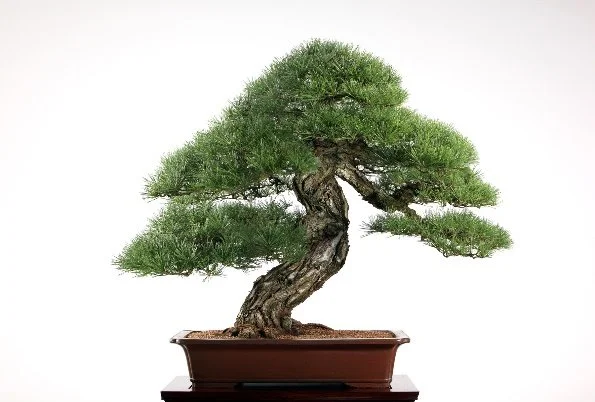
As with any living thing, a bonsai cannot simply be owned, like one could a painting or bronze sculpture. Knowledge and commitment will keep it alive, but artistic vision and skill is what allows it to grow ever more beautiful and satisfying over time.
BONSAI STYLES — TREES TELLING A STORY
Bonsai are classified by specific physical characteristics. These classifications are called “styles” in bonsai terminology, whereas in the larger art world, they might be called “genres”. Some styles are based on the crown, or the arrangement of branches, such as “pine tree style”, “windswept style”, etc. Some are based on the arrangement of the roots, such as “root-over-rock style”, “exposed root style” etc. Other styles are based on tree groupings, such as “clump style”, “grove style” etc.
The most common way of classifying bonsai, however, is by the shape and inclination if the trunk, which tells us something about a bonsai’s imagined history and natural environment. In short, it helps the bonsai tell a story.
Interpreting Bonsai Styles Based on the Shape of the Trunk
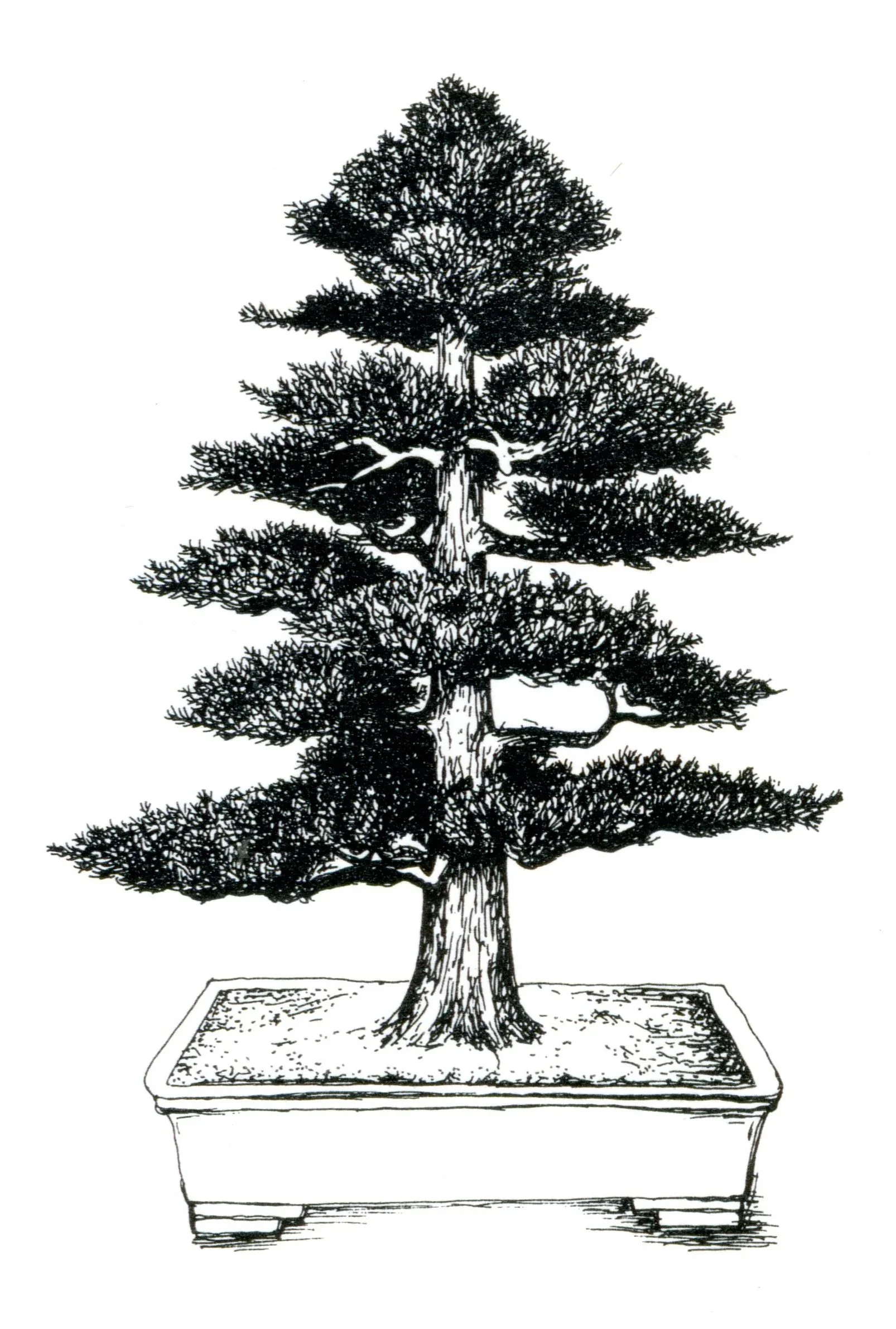
A classic example of a formal upright tree.
Formal Upright — The trunk is vertical and straight, suggesting a tree growing in a benign environment. It gives a feeling of quiet, calmness, formality, and grandeur.
Informal Upright — There are some changes of direction in the trunk, suggesting that the upward growth has been interrupted from time to time by environmental forces or insect or disease damage. Curves can suggest gentle movement, whereas angular movement appears stronger with some drama.
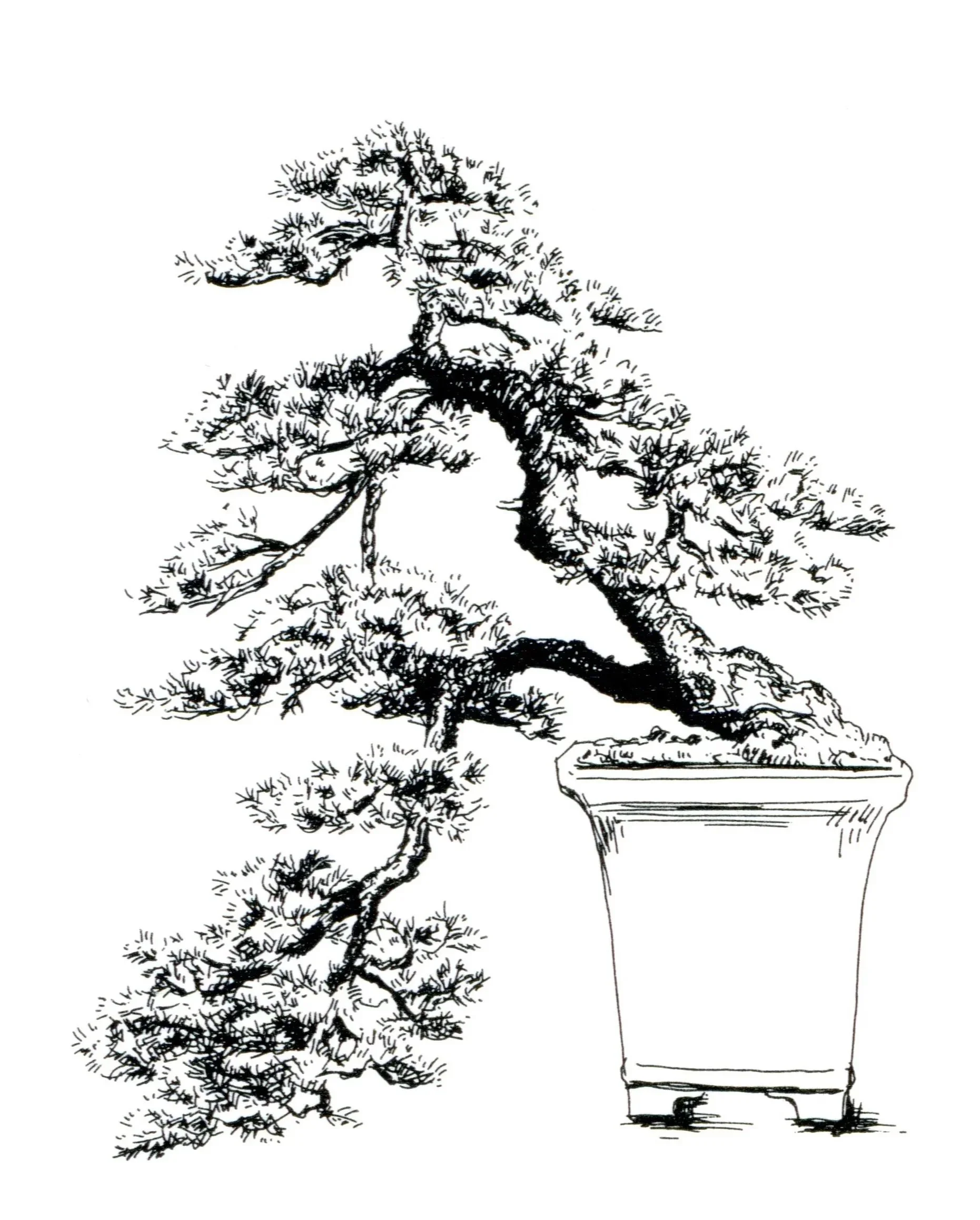
The lowest branch on this cascade bonsai drops all the way to the bottom edge of the pot.
Slanting — The trunk leans to one side. This can be caused by the tree reaching for light, frequent directional winds, or soil erosion near its base. This is a bit more dramatic, as the tree is strongly affected by its environment.
Semi-cascade — The trunk lies nearer horizontal than vertical, suggesting a tree on a high mountain slope, crushed by rockslides or pressed down to the earth by heavy winter snows. This is characteristic of high elevation or harsh environment.
Cascade or Full Cascade — The trunk drops below the roots, suggesting a tree hanging precariously from the side of a cliff. This is the most dramatic of the bonsai styles, suggesting a desire to survive under the most daunting circumstances.
BONSAI DISPLAY
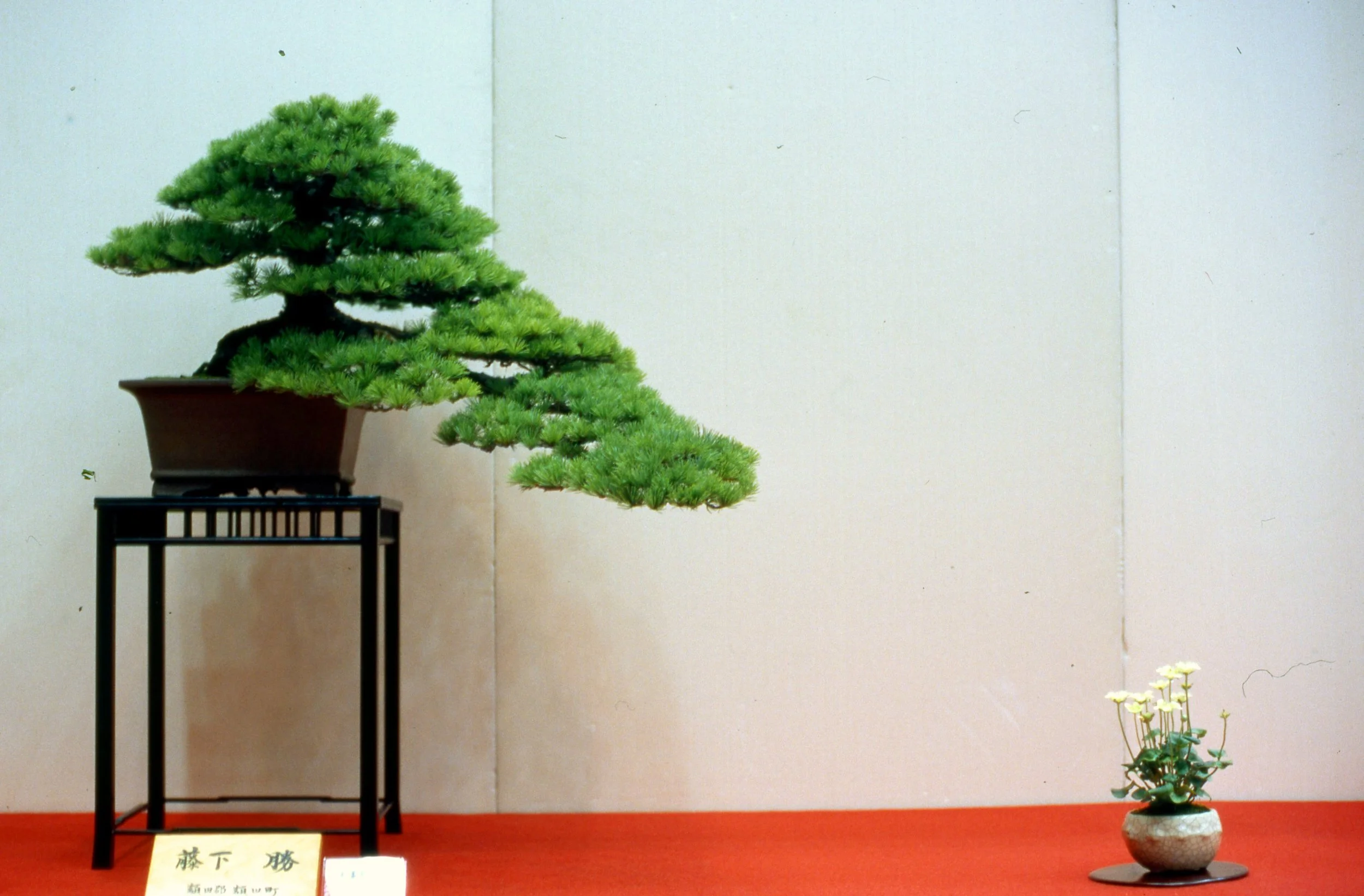
In the Japanese tradition, a bonsai may be brought indoors for a few days at a time and placed on formal display in an art alcove (Tokonoma) or a raised platform (Seki) to bring the bonsai up to proper viewing height.
The Purpose of Display
A display may be about the bonsai itself — its character, age, or special features.
A display may also be about an idea — the portrayal of a memory, a scene, season, or event. In this case there may be one or more supporting items displayed with the bonsai.
Elements of Display
Space — the usual minimum display space is the size of one standard tatami mat (floor covering), a space measuring about 6 feet wide by 3 feet deep.
Tree(s) — Depending on the size of the main bonsai, a secondary, contrasting bonsai may be added.
Display Stand — A low table, tall stand, or flat base on which the bonsai or other plant is placed
Hanging art — describes the theme or subject of the display. It is traditionally a scroll but can be framed art or a hung object. Poetry is often used, or imagery may suggest as scene, season or event.
A companion — can be a plant, stone, figurine or artifact.
Companion Plant—relates directly to the main bonsai. It can be used to:
Suggest a natural environment
Suggest a season
Provide a visual counterpoint to the tree in terms of texture and color
Stones—can be categorized as “representational,” suggesting something beyond themselves or “non-representational,” appreciated for their own appearance.
Representational stones include landscape stones (suiseki) such as mountain, plateau, waterfall, pool, etc.
Other representational stones include:
Figure stones (human, animal)
Object stones (hut, boat)
Pattern stones (flowers, lightning, moon, celestial objects)
Non-representational stones (biseki) are valued for color, unusual patterns or inclusions, unusual shape or texture, etc.
Figurines or artifacts—used in the same way other supporting elements are used, to enhance the bonsai or illuminate the theme of the display.
Economy — All elements in the display relate to each other, but no item or image in one element is repeated in another element.
BONSAI AGE
The age of a bonsai can be confusing, because it can be measured in two different ways — the physical age, and its age as a bonsai, usually called “years in training.”
Bonsai growers typically track the training, or the continuing work of artistically developing and maintaining a bonsai over time, in much the same way we measure the growth and development of our children.
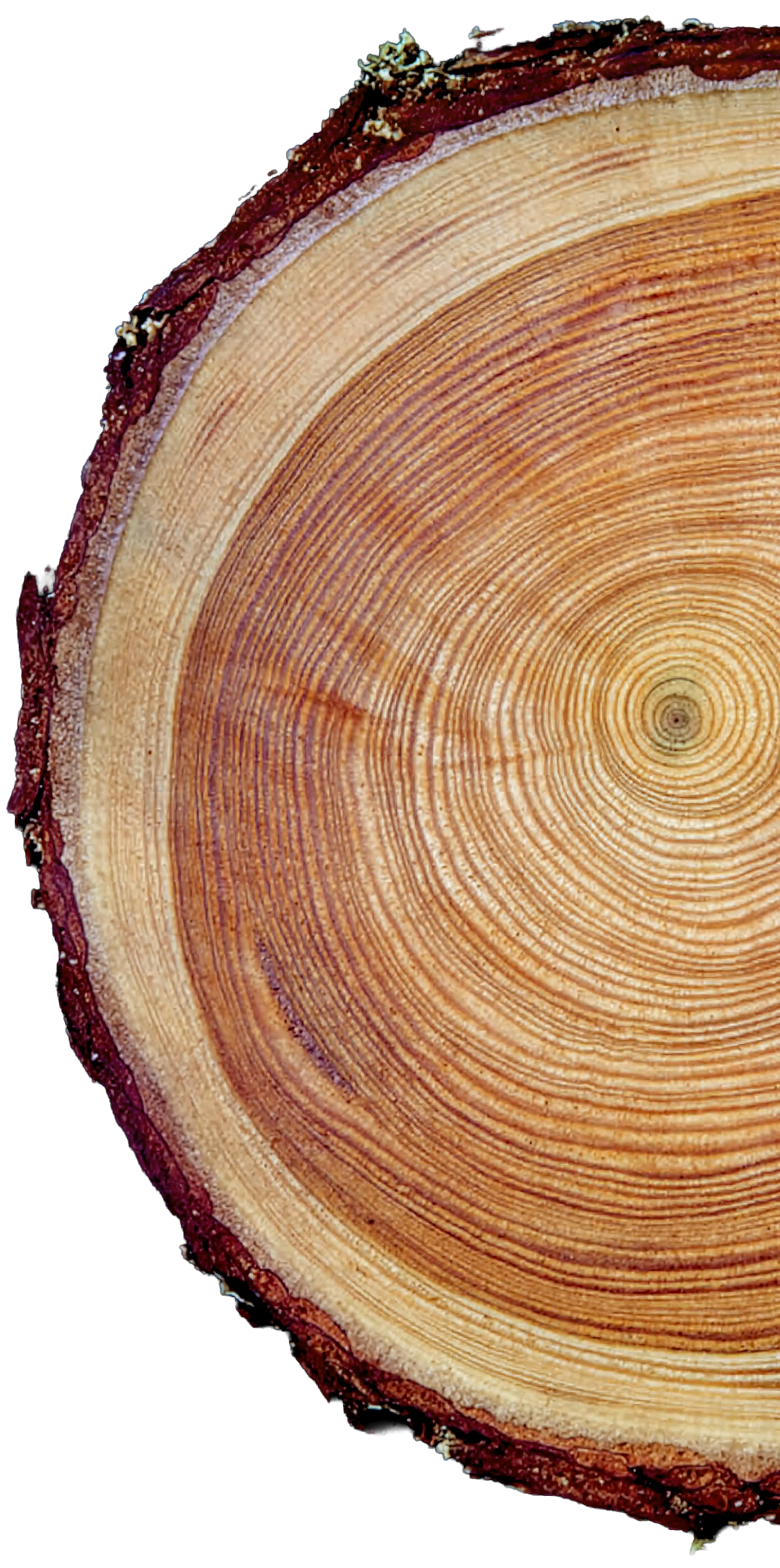
Unlike a child, however, the age of a bonsai can be confusing because if a tree has been cultivated for bonsai and trained as a bonsai from the beginning, its physical age and age as a bonsai will be the same.
However, if a tree was gathered from the wild and then brought into bonsai cultivation, its physical age might be decades or even centuries, whereas its age as bonsai will be only its years in bonsai training.
For instance, a tree that was grown as a nursery plant for 5 years before it was purchased to begin bonsai training might be physically 10 years old, but only 5 years old as a bonsai.
When referring to a bonsai’s age, especially referring to a tree originally gathered from the wild, a conscientious artist should always give the years in training as the age of the bonsai.