

Appreciation of Viewing Stones


Viewing stone appreciation originated as an art form in China more than 1,500 years ago, and later expanded to Korea and Japan. But appreciation of viewing stones as natural or found art has existed in the Western World for only a relatively short time. In Japan, viewing stones have a long tradition of being displayed with bonsai. Today, stones are frequently exhibited in formal exhibitions with bonsai to complement trees and are treasured worldwide by collectors.
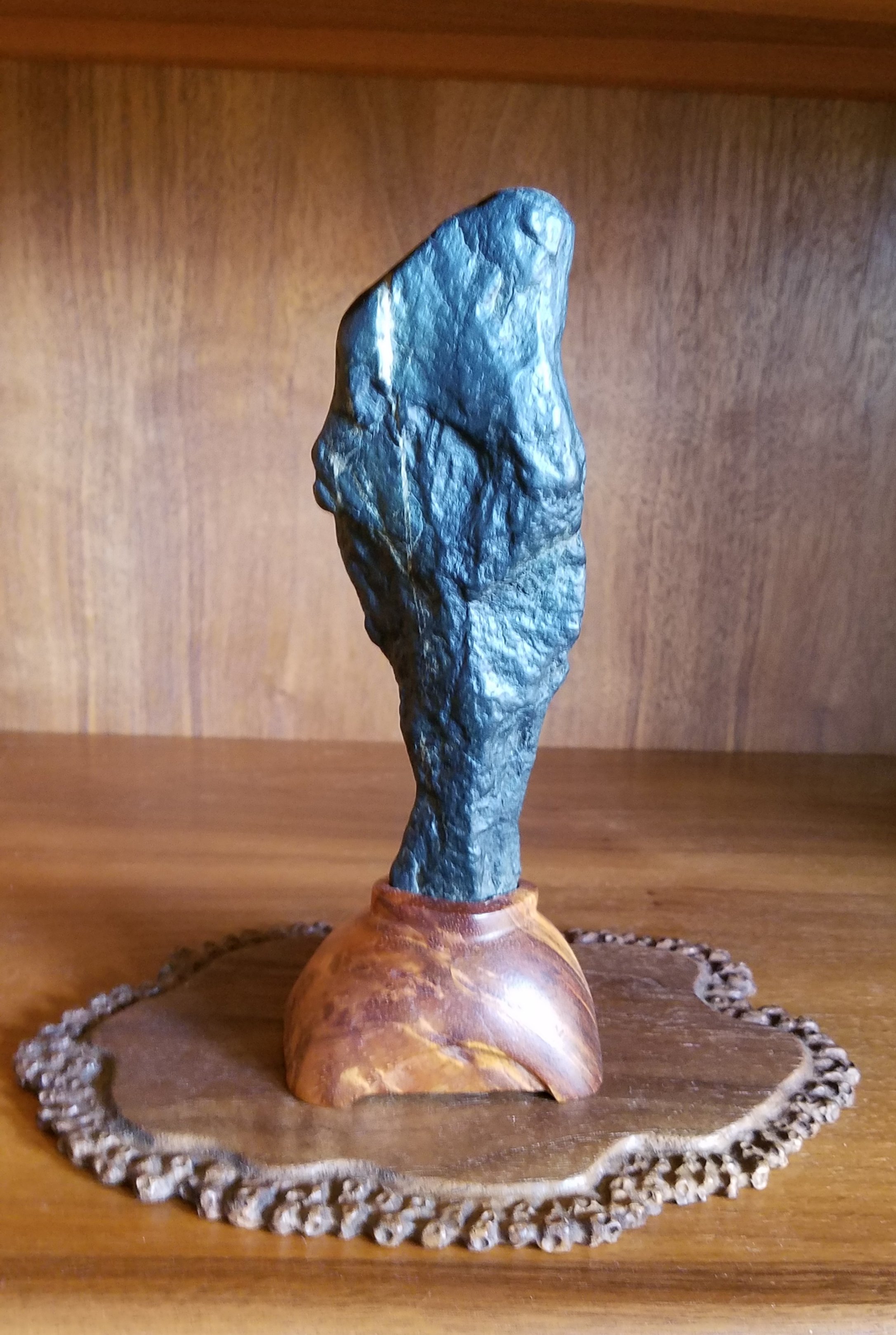


What are viewing stones?
They are stones shaped by the forces of wind, water, sand, and ice. The cascading action of water, sand and other material in swift flowing rivers or coastal wave action are the elements that create many viewing stones. Stones found in the deserts of the western United States and elsewhere are now sought after by collectors. These ventifacts are created by the elements and many have a high polish caused by a chemical reaction.
There are many categories or classifications of viewing stones. The largest and most commonly collected category are scenic vista miniatures of mountains, or Mountain Stones—some endowed with waterfalls, lakes, pools, snow and terraces. Shore Stones represent seascapes, islands and other scenes found along coastal areas. Desert landscapes are often depicted in ventifacts. A second major category is Object Stones, stones that resemble objects including humans, animals, plants and even a few man-made objects such as boats and huts. Celestial Stones represent images found in the heavens including the moon, stars and deep space while weather pattern stones represent meteorological events. Still other stones are sought after for their color, images embedded on their surfaces, or their abstract patterning or shape.
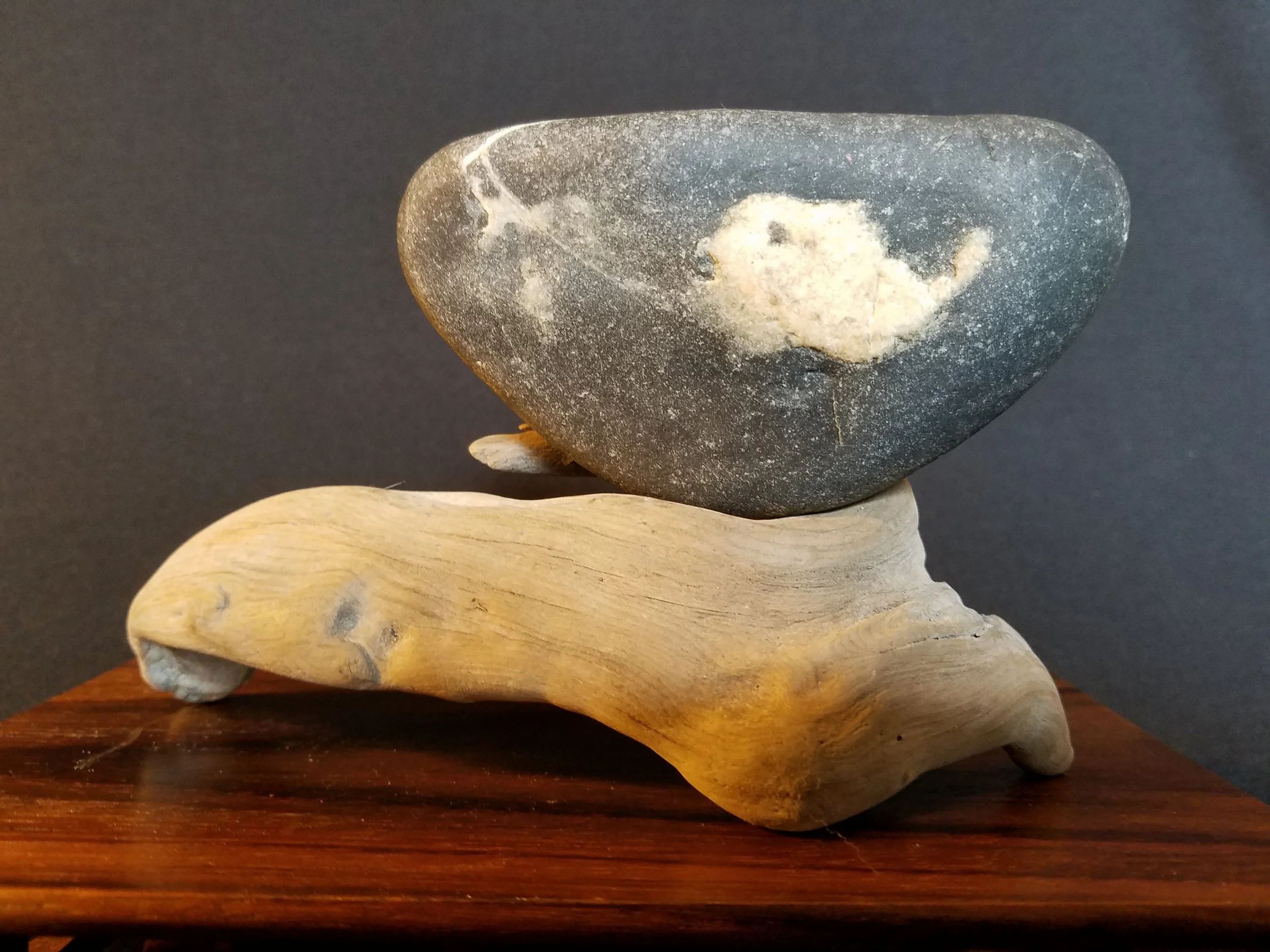


How are they displayed?
Stones are most often displayed in a wooden base custom-carved to snuggly fit the bottom of the stone and preset the stone in an optimal viewing position. Stones that are seen in the context of water or desert sand may be displayed in ceramic or metal containers filled with water or complementary colored sand. Stones with a flat bottom that will stand in a desired viewing position may be placed on a thin dark-colored board. Alteration of the visible surface of a stone is to be avoided as some collectors believe cutting a stone kills the “spirit” of the stone. However, a single cut on the bottom of a stone has become accepted to allow it to rest in an optimal viewing position, but the cut edge must be out of view in a carved base or sand.
Stone Images XV

Our most recent public show, Stone Images 15, was exhibited July 26 through August 3, 2025 at Bellevue Botanical Garden. The show featured a beautiful selection of stones from PSBA members and was well attended by the public. Docents were on hand throughout the show to answer questions about viewing stones.
Watch: PBS: Hunting the Stone: Suiseki in the West an interview with California Aiseki Kai, a California based viewing stone group.
about us…
Bonsai and viewing stones are two art forms that complement each other. Collecting and displaying viewing stones have a rather short but fruitful history in the Northwest but its roots go back to ancient China, Korea and Japan. In China these objects are known as gongshi (供石), in Korea they are called suseok (수석), the Japanese call them suiseki (水石), and in the United States we refer to them as viewing stones.
A small group of Californians is known to have searched for stones in the Stillaguamish River in the early 1990’s. In 2006 a handful of PSBA members formed the club as an informal study group to foster appreciation and collect stones. Viewing stones are prized for their shape, colors, or an embedded image or pattern on their surface.
In addition to staging an annual exhibit at the Pacific Bonsai Museum, club members go on summer and fall outings to collect stones and regularly display new stones at PSBA meetings. The club also educates members on how to find, evaluate and display stones. It also has held workshops to teach members how to carve custom wooden bases that fit stones when they are displayed.

For more information about the group please contact us.
See our photo gallery: Viewing Stone Gallery
Stone Images XII
Pacific Bonsai Museum — November 1, 2022–January 8, 2023
Scales of a mythical dragon, rugged black mountains soaring to one inch and a hungry bear fishing for a tasty salmon are among more than 30 viewing stones that were displayed in the pavilion at Pacific Bonsai Museum in Federal Way. The show, Stone Images 12, was staged by the Northwest Viewing Stone Club, a study group of the Puget Sound Bonsai Association.
By popular demand the club’s Viewing Stone Petting Zoo also returned on Saturday, Nov. 5, to teach young stone lovers how to polish new life into a dull looking stone. The exhibit was free and open to the public.


